


Amazon PPC vs Organic Ranking: What's the Difference?
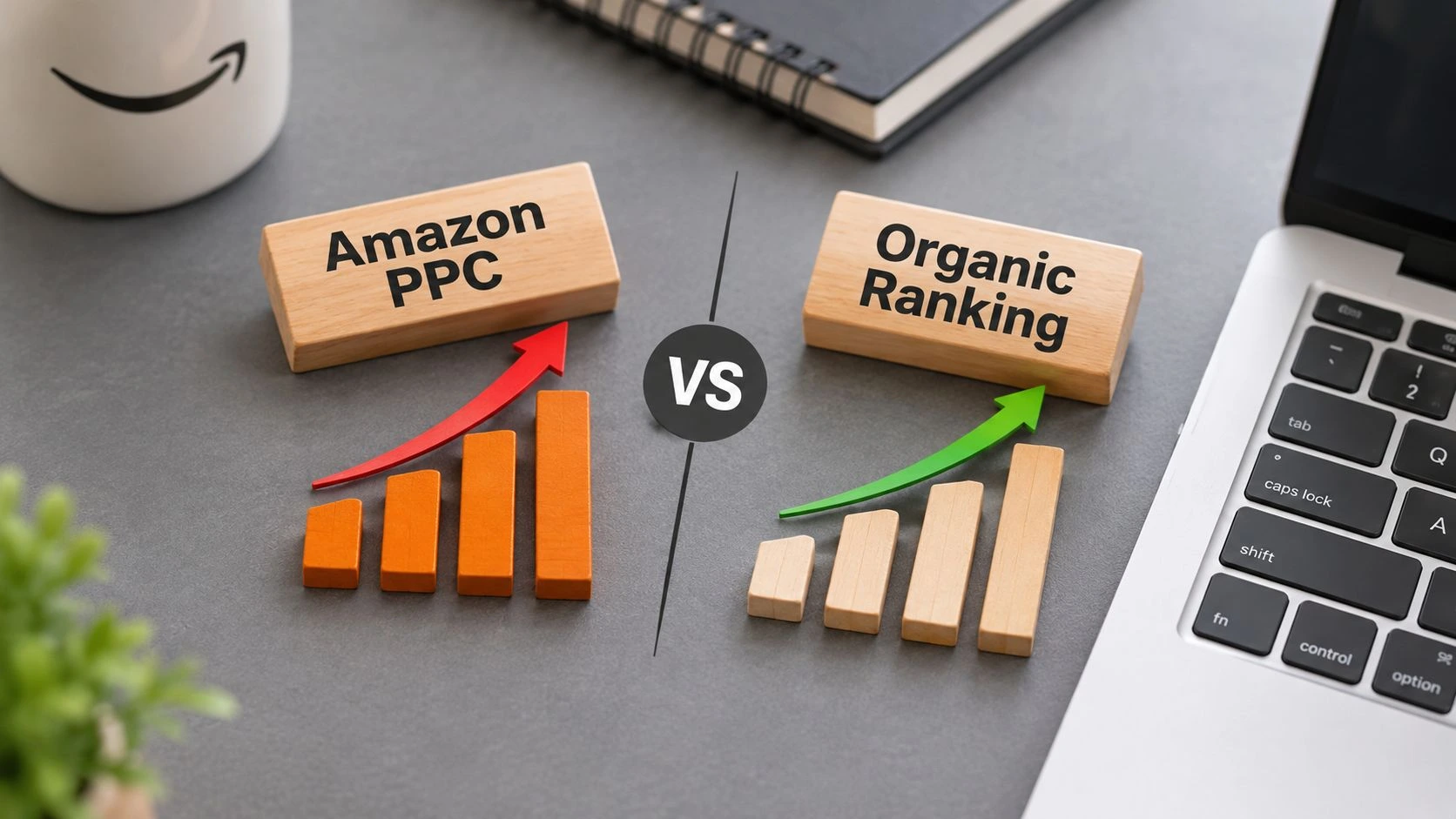
"Amazon PPC v/s Organic Ranking" is one of the significant topics that sellers should know to improve the visibility of their products and get steady sales. In both methods, the goal of sellers is to get products visible to customers, however, Amazon PPC includes paid advertisements and organic ranking includes unpaid search results.
Knowing the distinctions between Amazon PPC and organic search can help the sellers figure out which channel should be given priority. This article will talk about the differences between Amazon PPC and organic search, ranking factors for both channels, advantages of each channel, and how to utilize both channels simultaneously.
What Is Amazon PPC?
The Amazon PPC Advertising system is an advertisement method where Amazon customers can get products featured through sponsorship on Amazon. Customers are charged when someone clicks on a certain advertisement, therefore Amazon PPC is a type of advertisement whereby one pays per click on an advertisement.
How Amazon PPC Works
- Keyword Targeting: The sellers choose the relevant keywords through the manual targeting process or can let Amazon do the job for them automatically.
- Ads Auction: For Amazon, there is an ads auction where the ads that would show up on the page based on certain criteria get chosen.
- Product placement within Amazon: The advertisements may be embedded in the search result page as well as the detailed description page of the product itself.
- Cost Per Click: In place of charging on every impression, advertisers are charged on the basis of the number of clicks created by the campaign, which is based on cost per click.
- Campaign Optimisation: The marketers will analyse their performance based on the number of impressions, clicks, sales, ACoS and conversion rate.
What Is Organic Ranking on Amazon?
Amazon Organic Rank indicates how well a product ranks when someone performs a certain search in Amazon’s unpaid search results. Amazon Organic Search Rank is achieved by product relevance and product’s success at selling, not by the sellers paying per click.
There are several things that can help boost the organic rank of a product; these include use of relevant keywords, optimization of listing, competitive pricing, sales performance, and positive consumer experience.
How Amazon Organic Ranking Works
- Importance of Relevant Keywords: When searching for products on Amazon, Amazon looks at the product information such as the title, bullets, description, and more to determine the relevancy of the product.
- Sales Performance: Consistent sales could serve as an indicator for performance in that it would help Amazon determine if consumers are buying the item after finding out about it.
- Conversion Rate: High conversion rates mean that the product listing is able to convert the visitors into buyers.
- Stock Availability: Stock availability ensures that the vendor will not miss out on potential sales opportunities due to the buyer searching for the product organically.
- Customer Experience: Product ratings, reviews, descriptions, and deals may be helpful in the purchase decision process.
Amazon PPC vs Organic Ranking: 8 Major Differences
The primary distinction between Amazon PPC and organic ranking lies in how products get featured through search engine optimization (SEO). Amazon PPC involves paying for listings, while organic ranking depends upon product relevance.
- Cost: The PPC campaign on Amazon costs the advertisers money in terms of their budgets while organic traffic to a website does not cost money per click.
- Search placement: Amazon’s paid advertisements differ from its organic search results in terms of placement, as the former appear in advertisement placements whereas the latter appear in search placements.
- Visibility: PPC campaigns on Amazon could provide visibility opportunities once the campaigns get approved, whereas organic visibility would depend on product listings’ relevance and success..
- Keyword Targeting: Amazon’s PPC gives sellers an opportunity to target particular keywords either manually or automatically in contrast organic keyword targeting relies on whether the listings match shoppers' search patterns.
- Ranking Factors: PPC visibility relies on bids, targeting, competition, relevance and auction participation, while the ranking factors for an Amazon product are relevance and shopping performance.
- Traffic Source: Amazon PPC drives paid traffic with sponsored listings, while organic ranking draws traffic from free search listings.
- Long-term Effects: PPC visibility requires constant campaign presence and budget allocation, whereas organic SEO ranking will keep on delivering traffic without additional costs.
- Performance Tracking: The performance of PPC campaigns is analyzed using impressions, clicks, spend, orders, and ACoS; however, the performance of organic campaigns can be determined by keyword rankings and organic sessions.
How to Compare Organic and Paid Visibility Across Amazon Search Results
Comparing your natural and paid results will give you an understanding of how visible your products are. This can help you to uncover opportunities around keywords and improve the effectiveness of your advertisements on Amazon.
1. Compare Organic and paid rankings
By comparing organic and paid (Sponsored Products) rankings you can get a good insight into how visible your products are in Amazon searches.
2. Find under performing keywords
Find keywords that are performing well in paid ads, but poorly in organic search. By using the best Amazon PPC tools for sellers, you can get an understanding of how your campaigns are performing and find areas to optimise.
3. Understand how effective your advertising is
Use metrics such as Impressions, Clicks, ACoS, TACoS and Sales in order to understand how effective your advertising is. Planning your Amazon PPC strategy well can help increase the efficiency and profitability of your campaigns.
4. Identify Visibility Gaps
Find keywords where competitors are outperforming your product organically, or where your product relies heavily on paid ads. Improve your listings and update your PPC targeting in order to improve visibility in search.
By analysing both organic traffic and paid traffic Amazon sellers can make more informed decisions on which keywords to target, how much to spend on advertising and how to grow sustainably.
Does Amazon PPC Help Organic Ranking?
Indeed, Amazon PPC can indirectly help with organic ranking through increasing the product's visibility and providing chances for making more sales. The purchases made through sponsored ads could influence the shopping performance of the product and positively affect its organic ranking.
Nevertheless, there is no direct connection between increased advertising costs and improved organic ranking, and one is not able to buy an organic search placement through Amazon PPC campaigns.
How to Improve Amazon Organic Ranking Without Depending on PPC
Those who wish to optimize Amazon organic ranking have to focus on product relevancy and listings. Here are a few suggestions that will improve your ranking organically without having to rely on paid advertising.
- Title optimization of products: It is important that the primary keyword is used in the title of the product along with any other information about the product.
- Bullet Points Enhancement: Use good and detailed bullet points to include all information about the product specifications, benefits and second keywords.
- Use Keywords Appropriately: Consider the possible questions that can be asked by your potential customers regarding the product/service and use appropriate keywords without keyword stuffing.
- Use Good Images: Use high quality images which depict the features of the product along with their dimensions and uses.
- Competitive Price: Analyze the prices offered by your competitors so that your product remains competitive.
- Convertions: Make sure that you provide accurate information about the product so that the customer can evaluate and buy the product.
Amazon PPC and SEO Strategy: How to Use Both Together
Effective Amazon PPC and SEO marketing tactics involve the integration of paid and organic listings to enhance the visibility of products depending on their placement. PPC enables sellers to target consumers via advertisements, and SEO involves optimizing listings for unpaid keyword visibility.
- Before Running Your Campaign: Optimize product titles, bullet points, images, and descriptions prior to paying for any advertisements in order to have a good product listing.
- Utilize PPC Search Term Reports: Study customer search terms in order to determine the relevant keywords which may also be optimized for organic listings.
- Measure your ACoS and TACoS: Watch your spending on PPC campaigns and total advertising cost of sales to see how PPC spending affects sales performance.
- Keyword Ranking Monitoring for Amazon: Track key keywords to see what is happening in terms of ranking in organic searches.
- Test Listing Content: You can conduct tests on images, titles, and other items in the listing that may lead to improved performance.
For better campaign management, explore our guide on Amazon PPC Strategy 2027: ACoS, TACoS, and Profit Margins.
You can also explore Best Amazon PPC Tools for Sellers to understand how different tools help with keyword research, campaign management, and advertising optimization.
Common Mistakes in Amazon PPC and Organic Ranking
Sellers stand to lose visibility and effectiveness of ads in Amazon when they only concentrate on one particular aspect of their marketing efforts. These tips on how to avoid the common mistakes will help increase visibility and performance of ads in Amazon.
- Relying Only On PPC: Relying solely on paid advertising may cause costs to rise for the business and sales to depend on constant advertising.
- Organic SEO Ignored: Not optimizing listings may hinder the potential for obtaining free traffic from search engines via organic keywords.
- Irrelevant Keywords: It may result in wastage of marketing budget on PPC campaign by targeting irrelevant keywords that would only attract buyers not interested in the product.
- Assumption of Guaranteed Rankings: Higher expenditure on advertisement will not lead to better organic ranking since the two concepts are distinct from each other.
- Overlooking Campaign Data: When one does not track ACoS, conversion rates, search terms, and overall campaign performance, it becomes hard to detect any issues or optimize ads.
- Neglecting Listing Improvement: Not updating inaccurate data, poor quality images, or confusing product descriptions may have an impact on customers’ shopping experience.
For more information about common account and listing problems, read Top Amazon Seller Central Issues in 2027: Problems and Fixes.
Frequently Asked Questions
1. What is the difference between Amazon PPC and organic ranking?
With Amazon PPC, advertisers make payments per click on their ads whereas in organic rankings, the placement of the item is determined according to relevance and shopping performance without having to pay anything.
2. Does Amazon PPC improve organic ranking?
Amazon PPC is not necessarily linked to higher organic rankings, but advertising traffic and resulting sales can contribute indirectly to the overall performance of products.
3. Can a product rank organically without Amazon PPC?
Indeed, it is possible for products to come up in Amazon's organic search results without the use of any paid ads if the products have relevant listings and shopping success.
4. Which is better: Amazon PPC or organic ranking?
Amazon PPC is good to get sponsored visibility and target your shoppers, while organic ranking is important to have search traffic without spending on clicks constantly.
5. How can sellers improve Amazon organic search ranking?
In terms of organic search visibility, sellers can make efforts in areas such as keyword relevancy, listings optimization, pricing competitiveness, stock status, and customer experience.
6. Why is Amazon PPC important for new products?
Amazon PPC can aid the promotion of new products with low visibility and less sales history with the help of sponsored listings.
7. Should sellers use Amazon PPC and organic SEO together?
Certainly, integrating PPC campaign efforts with organic listing optimization helps the seller focus on both paid and free search listings while building a better traffic mix.
Final Thoughts
Choosing between Amazon’s PPC and organic ranking is not about opting for one and rejecting the other, but rather understanding how each of them brings its own benefits to the visibility and sales of the products. PPC helps to generate paid ads, while organic ranking enables generating traffic for products without spending money.
The use of appropriate PPC campaigns, proper optimization of keywords, a great product listing, and regular performance monitoring will help you create an ideal strategy for Amazon.