



Sam
Amazon
July 23, 2026
How to Prevent an Amazon Seller Suspension in 2026 Before Amazon Requests Proof
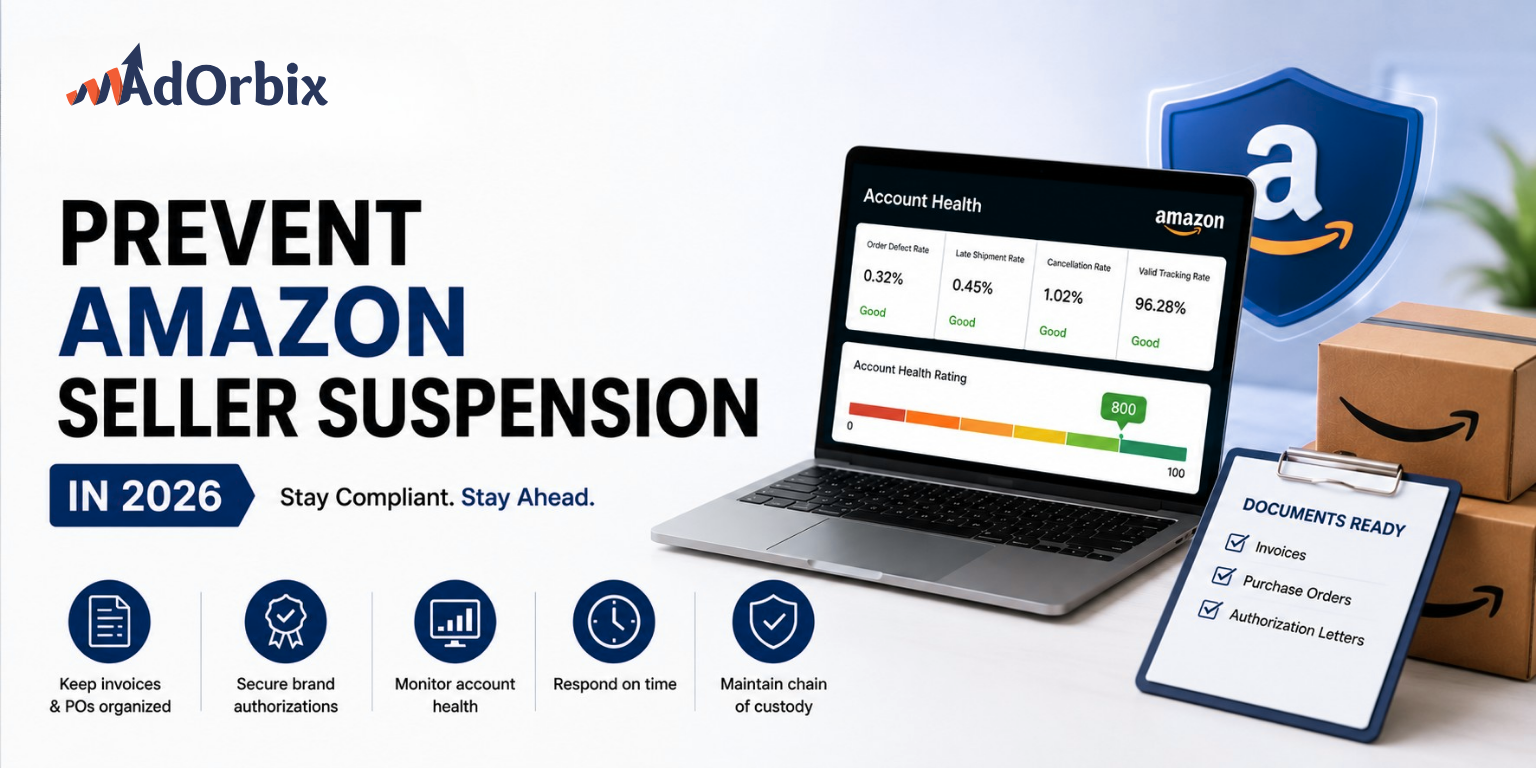
Imagine waking up tomorrow to find your Amazon Seller Central account suspended.
Sales stop instantly. FBA inventory becomes inaccessible. Payments are frozen. Every hour your account remains inactive means lost revenue, declining rankings, and frustrated customers.
Now ask yourself one question:
Could you provide supplier invoices, purchase orders, and proof of authenticity for every ASIN you sell within the next 24 hours?
For thousands of Amazon sellers in 2026, that question determines whether an account review becomes a minor inconvenience—or a business-threatening suspension.
The reality is that Amazon's enforcement system has evolved dramatically. Suspensions are happening faster, investigations begin with minimal warning, and documentation—not counterfeit products—is now one of the biggest reasons legitimate sellers lose selling privileges.
The good news? Most suspensions are preventable.
This guide explains what has changed in Amazon's enforcement process, why documentation matters more than ever, and how you can protect your business before Amazon asks for proof.
Amazon's Enforcement System Has Changed in 2026
Amazon has always monitored seller performance, but the review process is no longer as reactive as it once was.
Today's enforcement combines automation, machine learning, and continuous account monitoring to identify potential risks before a human investigator ever reviews your account.
Amazon constantly evaluates factors such as:
- Order Defect Rate (ODR)
- Late Shipment Rate (LSR)
- Cancellation Rate
- Valid Tracking Rate
- Policy Violations
- Product Authenticity Signals
- Customer Complaints
- Brand Reports
When unusual patterns appear, automated systems can immediately place listings—or even entire accounts—under review.
Many sellers now receive Section 3 authenticity investigations that arrive without previous warnings. In some cases, Amazon also requests video verification of inventory to confirm products are genuine and sourced legitimately.
Unlike previous years, waiting until Amazon contacts you is no longer a viable strategy.
Preparation must happen before the investigation begins.
The Biggest Suspension Trigger Isn't Counterfeit Products
One of the biggest misconceptions among Amazon sellers is that only counterfeit sellers receive authenticity suspensions.
In reality, many legitimate businesses are suspended simply because they cannot quickly prove where their inventory came from.
Amazon doesn't just want to know what you're selling.
They want evidence of:
- Where the products originated
- Who supplied them
- When they were purchased
- Whether the quantities match
- Whether you were authorized to sell them
If this documentation isn't readily available, Amazon may assume additional verification is necessary—even if your products are completely authentic.
Poor recordkeeping has become one of the most common causes of avoidable suspensions.
Build a Documentation System Before Amazon Asks
Every ASIN you sell should have a complete sourcing history that can be retrieved within minutes.
Think of it as creating a digital evidence folder for each product.
A strong documentation system typically includes:
Supplier Invoices
Maintain invoices showing:
- Supplier information
- Purchase date
- Product quantities
- Matching ASINs or SKUs
- Invoice numbers
Purchase Orders
Purchase orders should align with invoices and clearly demonstrate your purchasing history.
Consistency between these documents strengthens your authenticity claims.
Brand Authorization
If you're selling branded products, keep current:
- Letters of Authorization (LOAs)
- Distribution agreements
- Manufacturer approvals
- Brand partnership documentation
Chain of Custody
If inventory comes through distributors instead of directly from the manufacturer, Amazon may request proof beyond your immediate supplier.
Being able to trace products back through the supply chain significantly improves your position during an investigation.
Organize by ASIN—Not Supplier
Many sellers organize documents by vendor.
Amazon investigates by product.
Creating documentation folders for every ASIN dramatically reduces response time when Amazon requests proof.
Amazon FBA Suspension Prevention Checklist
Use this proactive checklist to strengthen your account before issues arise.
- Store supplier invoices digitally and organize them by ASIN.
- Match every invoice with the corresponding purchase order.
- Update documentation after every reorder.
- Retain Letters of Authorization for all branded inventory.
- Maintain a complete chain of custody for distributor-sourced products.
- Review Account Health metrics every week—not only after receiving notifications.
- Respond immediately to any authenticity investigation or Section 3 notice.
- Archive documentation securely with cloud backups.
If Amazon Suspends Your Account
Receiving a suspension notice is stressful, but rushing into an appeal often makes things worse.
Successful reinstatement depends on evidence—not emotion.
Your appeal should focus on three key elements:
1. Identify the Root Cause
Clearly explain what caused the issue instead of denying responsibility or making assumptions.
Amazon wants facts.
2. Provide Complete Documentation
Include all requested evidence, including:
- Supplier invoices
- Purchase orders
- Authorization letters
- Additional sourcing records
- Inventory verification (if requested)
The stronger your documentation, the easier it becomes for investigators to verify authenticity.
3. Submit a Strong Plan of Action (POA)
An effective POA explains:
- What happened
- Why it happened
- What corrective actions were taken
- What permanent operational improvements prevent recurrence
Avoid generic statements like:
"We will be more careful."
Instead, explain measurable operational improvements such as:
- New documentation procedures
- Supplier verification processes
- Inventory auditing workflows
- Internal compliance reviews
Specific actions build credibility.
Why Proactive Sellers Recover Faster
The difference between a one-day investigation and a multi-week suspension often comes down to preparation.
Sellers who already have organized documentation can usually respond immediately.
Those who begin collecting invoices after receiving a suspension often spend valuable days contacting suppliers, searching emails, or recreating purchase histories while their listings remain inactive.
Preparation isn't just good practice—it protects revenue.
Final Thoughts
Amazon's marketplace is becoming more sophisticated every year, and so is its enforcement process.
Success in 2026 isn't just about great products, competitive pricing, or effective advertising.
It's about operational readiness.
By maintaining organized sourcing documentation, monitoring account health consistently, and preparing evidence before Amazon requests it, sellers dramatically reduce the risk of unexpected suspensions.
The best time to prepare isn't after receiving a suspension notice.
It's today.
Key Takeaways
- Amazon's 2026 enforcement relies heavily on automation and proactive risk detection.
- Missing or poorly organized sourcing documentation is now one of the leading causes of seller suspensions.
- Maintain supplier invoices, purchase orders, and authorization letters for every ASIN.
- Organize documentation by product rather than by supplier for faster responses.
- Section 3 investigations may include inventory video verification requests.
- Appeals supported by evidence and a detailed Plan of Action are significantly stronger than generic responses.
- Proactive documentation can save weeks of lost sales and account downtime.
-
Frequently Asked Questions
What is a Section 3 suspension on Amazon?
A Section 3 suspension generally relates to concerns about product authenticity, intellectual property, or counterfeit risk. Amazon typically requests documentation proving that products were sourced from legitimate suppliers before reinstating selling privileges.
How long does an Amazon suspension appeal take?
There is no fixed timeline. Well-prepared appeals supported by complete documentation and a detailed Plan of Action are generally reviewed more efficiently than appeals lacking sufficient evidence.
What documents does Amazon usually request to verify authenticity?
Amazon commonly asks for:
- Supplier invoices
- Purchase orders
- Letters of Authorization
- Manufacturer documentation
- Distribution agreements
- Additional proof showing the product's chain of custody
-
Can I prevent an Amazon suspension?
While no seller can eliminate every risk, maintaining organized sourcing records, monitoring Account Health regularly, complying with Amazon policies, and responding quickly to investigations significantly reduces the likelihood of suspension.
Need Expert Help Before Amazon Does?
Waiting until your account is suspended can be costly.
At Adorbix, we help Amazon sellers strengthen their Account Health, review sourcing documentation, identify compliance gaps, and prepare for authenticity investigations before they become serious problems.
Whether you want a preventive account audit or assistance with a suspension appeal, our Amazon specialists are ready to help you protect your business and keep your listings active.
