



Sam
Amazon
August 3, 2026
Amazon A plus Content Best Practices Boost Conversions in 2026 Adorbix
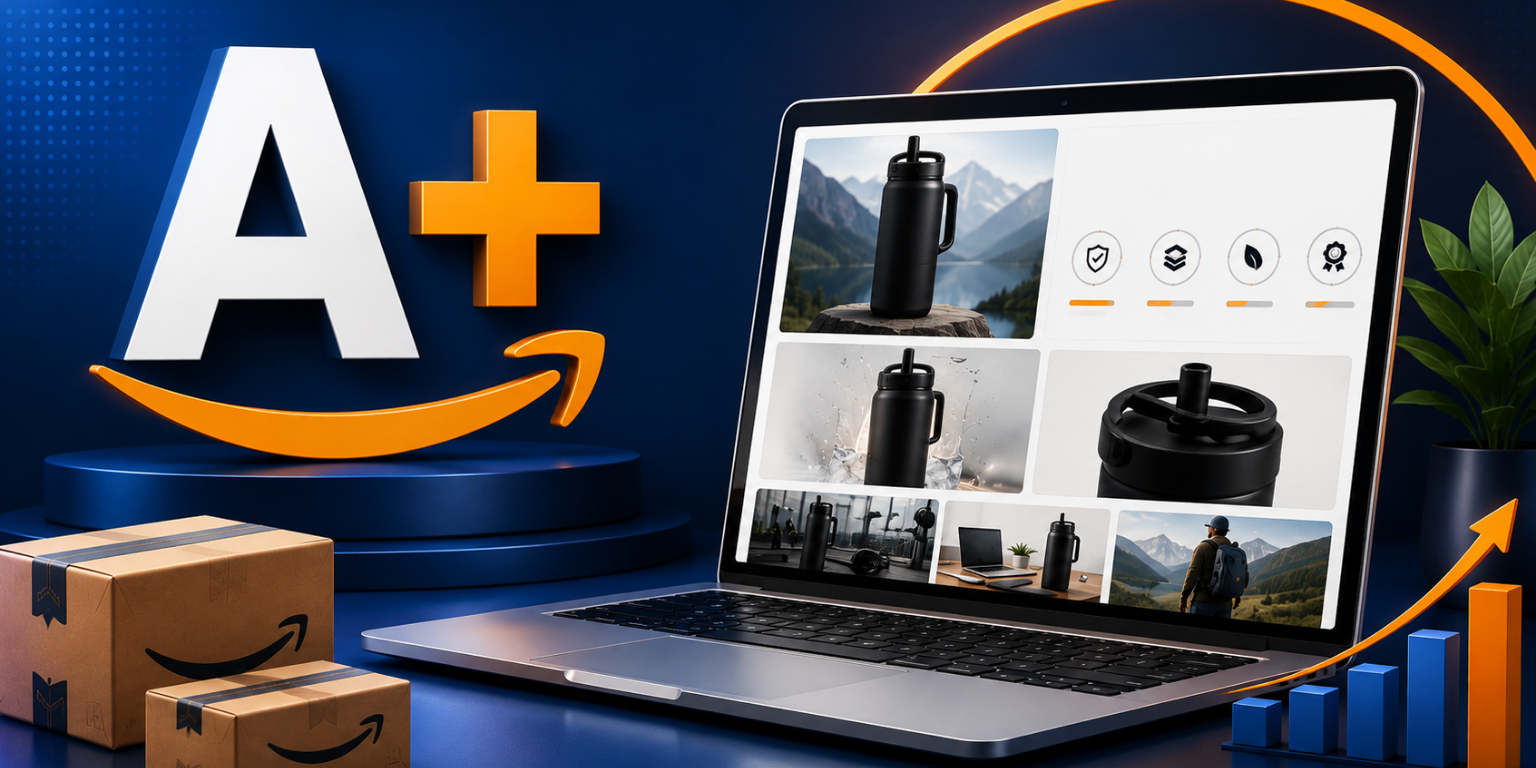
Amazon A+ Content Best Practices: How to Build Product Pages That Convert More Shoppers
Getting shoppers to your Amazon product page is only half the battle.
The real challenge is convincing them to click "Add to Cart."
That's where Amazon A+ Content becomes one of the most valuable tools available to brand owners.
Well-designed A+ Content helps customers understand your product, compare options, build confidence in your brand, and make faster purchasing decisions. While it doesn't directly improve Amazon search rankings, it often increases conversion rates by creating a more engaging shopping experience.
In this guide, we'll explore the best practices that successful Amazon brands follow when designing A+ Content—and how you can use those strategies to increase sales and strengthen your brand presence.
What Is Amazon A+ Content?
Amazon A+ Content is an enhanced product description feature available to brands enrolled in Amazon Brand Registry.
Instead of relying on plain text descriptions, brands can create visually rich product pages using:
- Lifestyle photography
- Comparison charts
- Product feature modules
- Infographics
- Brand storytelling
- Technical specifications
- Educational content
The goal is to help customers make informed buying decisions while reducing uncertainty before purchase.
Why Amazon A+ Content Matters
Online shoppers cannot physically interact with products before buying.
A+ Content helps bridge that gap by answering important customer questions visually.
Effective A+ Content can:
- Improve customer confidence
- Increase conversion rates
- Reduce purchase hesitation
- Highlight product benefits
- Differentiate your brand
- Lower return rates by setting clear expectations
Rather than simply decorating a product page, A+ Content supports better purchasing decisions.
Focus on Benefits Before Features
One of the biggest mistakes brands make is listing technical specifications without explaining why they matter.
Instead of saying:
Stainless Steel Construction
Explain the customer benefit:
Durable stainless steel construction designed for long-lasting everyday use and easy maintenance.
Every feature should answer one important question:
"Why should the customer care?"
When shoppers understand the value behind each feature, they're more likely to convert.
Use High-Quality Lifestyle Images
Lifestyle imagery allows customers to visualize the product in real-life situations.
Instead of isolated product photos, show:
- Products being used
- Scale and dimensions
- Different environments
- Everyday applications
- Target audience scenarios
Images should tell a story that helps customers imagine owning the product.
Build a Clear Visual Hierarchy
Customers rarely read every word.
Most scan product pages.
Design A+ Content so shoppers can understand key information within a few seconds.
Best practices include:
- Large headlines
- Short supporting text
- Consistent spacing
- Easy-to-read typography
- Balanced layouts
- Clear visual flow
Avoid overwhelming shoppers with excessive text.
Tell Your Brand Story
Customers increasingly buy from brands they trust.
Use part of your A+ Content to explain:
- Who you are
- What your brand stands for
- Product philosophy
- Quality standards
- Manufacturing approach
- Customer commitment
Authentic storytelling builds emotional connection beyond product specifications.
Highlight Your Unique Selling Points
Don't assume customers know why your product is different.
Clearly explain:
- Premium materials
- Better durability
- Innovative design
- Sustainability
- Safety certifications
- Performance advantages
Help shoppers understand why your product deserves consideration over competing listings.
Answer Customer Questions Before They Ask
One of the best A+ strategies is reducing uncertainty.
Address common concerns visually.
Examples include:
- Size guides
- Compatibility charts
- What's included
- Care instructions
- Usage recommendations
- Installation guidance
The fewer unanswered questions customers have, the easier purchasing becomes.
Use Comparison Charts Effectively
Comparison charts help customers select the right product within your catalog.
Instead of sending shoppers back into Amazon search results, comparison modules encourage them to remain within your brand ecosystem.
Include:
- Product size
- Key features
- Best use cases
- Available colors
- Capacity
- Intended audience
This can improve both conversions and cross-selling opportunities.
Optimize for Mobile Devices
A significant portion of Amazon shoppers browse on mobile devices.
Ensure:
- Text remains readable.
- Images are not overcrowded.
- Important messages appear early.
- Visual elements scale effectively.
Always review A+ Content from a mobile perspective before publishing.
Keep Branding Consistent
Consistency builds recognition.
Maintain the same:
- Color palette
- Typography
- Photography style
- Iconography
- Messaging tone
Across all listings.
Strong branding improves professionalism and customer trust.
Avoid Common A+ Content Mistakes
Many listings underperform because of avoidable design issues.
Common mistakes include:
- Low-resolution images
- Excessive text
- Generic stock photography
- Inconsistent branding
- Poor spacing
- Small fonts
- Weak visual hierarchy
- Focusing on features instead of benefits
Simpler, customer-focused designs usually perform better.
How to Measure A+ Content Performance
Publishing A+ Content is only the beginning.
Monitor key performance indicators such as:
- Conversion rate
- Unit Session Percentage
- Click-through rate from ads
- Return rate
- Customer reviews
- Repeat purchases
Testing and refining content over time often produces better long-term results than treating A+ as a one-time project.
Premium A+ Content vs. Standard A+ Content
Standard A+Premium A+Static image modulesInteractive modulesBrand storyEnhanced storytellingComparison chartsLarger immersive layoutsProduct featuresRich multimedia experiencesStrong conversionsPremium brand experience
Premium A+ offers more creative flexibility, but both formats benefit from thoughtful design and customer-focused messaging.
A+ Content and Amazon PPC Work Together
Driving traffic through Amazon PPC is only one part of the equation.
If your product page doesn't convert, advertising becomes less efficient.
High-quality A+ Content helps improve the customer experience after the click, supporting stronger conversion rates and potentially improving the overall return on advertising investment.
Organic optimization and paid advertising are most effective when developed as part of a unified strategy.
How Adorbix Creates High-Converting Amazon A+ Content
At Adorbix, we believe A+ Content should do more than look attractive—it should influence purchasing decisions.
Our creative team combines marketplace research, consumer psychology, conversion optimization, and premium visual design to produce Amazon content that strengthens both brand perception and sales performance.
Our Amazon creative services include:
- Standard A+ Content Design
- Premium A+ Content Design
- Brand Story Modules
- Amazon Storefront Design
- Listing Optimization
- Product Infographics
- Lifestyle Image Design
- Comparison Chart Creation
- Amazon PPC Creative Alignment
Every design is developed with one goal:
Help customers understand your product faster and purchase with confidence.
Frequently Asked Questions
Does Amazon A+ Content improve SEO?
Amazon has stated that A+ Content is intended to improve the customer experience rather than directly influence keyword rankings.
However, stronger conversion rates can positively support overall listing performance.
Is A+ Content available to every seller?
No.
Brands generally need to be enrolled in Amazon Brand Registry to access A+ Content.
Can A+ Content increase conversion rates?
Many brands report improved customer engagement and higher conversion rates after implementing well-designed A+ Content, although results vary by product category, competition, pricing, and execution.
Should every product have A+ Content?
Whenever possible, yes.
Products with strong sales potential benefit most from professional A+ Content that helps shoppers understand value quickly.
What's more important: PPC or A+ Content?
Neither replaces the other.
PPC generates traffic, while A+ Content helps convert visitors into customers.
Successful Amazon strategies invest in both.
Key Takeaways
- Amazon A+ Content helps customers understand products through visual storytelling.
- High-quality images and benefit-focused messaging typically outperform feature-heavy designs.
- Comparison charts, brand storytelling, and educational content reduce purchase hesitation.
- Mobile-friendly layouts and consistent branding improve the customer experience.
- A+ Content works best when combined with strong Amazon SEO and PPC strategies.
- Continuous testing and refinement lead to better long-term performance.
Final Thoughts
Amazon A+ Content is no longer just a branding feature—it's one of the most effective ways to influence purchasing decisions on the marketplace.
As competition continues to grow, shoppers expect product pages that are informative, visually engaging, and easy to understand. Brands that invest in high-quality A+ Content can build greater trust, communicate value more effectively, and create a stronger buying experience than competitors relying on basic listings alone.
At Adorbix, we specialize in creating conversion-focused Amazon A+ Content that combines strategic messaging, premium design, and marketplace expertise. Whether you're launching a new product or refreshing an existing catalog, our team helps brands transform ordinary product pages into high-performing shopping experiences that drive measurable business growth.
