


Amazon Full-Funnel Campaigns Explained: How AI Connects Sponsored Ads, Display, and Streaming TV
Amazon Full-Funnel Campaigns is an AI-powered advertising solution that connects Sponsored Ads, display, video, and Streaming TV within a single coordinated campaign. Launched in U.S. open beta in September 2026, the solution uses Amazon's shopping, browsing, and streaming signals to help advertisers reach new customers, build brand awareness, and generate sales. For Amazon sellers, it introduces a simpler way to manage advertising across multiple stages of the customer journey while using one campaign budget and AI-driven optimization.
What are Amazon Full-Funnel Campaigns, and why do they matter for sellers?
Amazon Full-Funnel Campaigns is an advertising solution designed to help brands reach customers throughout the buying journey, from initial product discovery to purchase.
Traditionally, Amazon advertisers often manage Sponsored Products, Sponsored Brands, display, and Streaming TV advertising through separate campaigns.
Each advertising format may have different targeting approaches, budgets, creative requirements, and performance reports.
Amazon Full-Funnel Campaigns brings these formats together through a unified AI-powered campaign experience.
Amazon officially announced the open beta at its unBoxed 2026 event on September 29, 2026.
According to Amazon's official announcement, advertisers can provide their products, campaign budget, and an optional return on ad spend target.
Amazon's AI then coordinates advertising formats, audience engagement, and budget allocation across different stages of the buying journey.
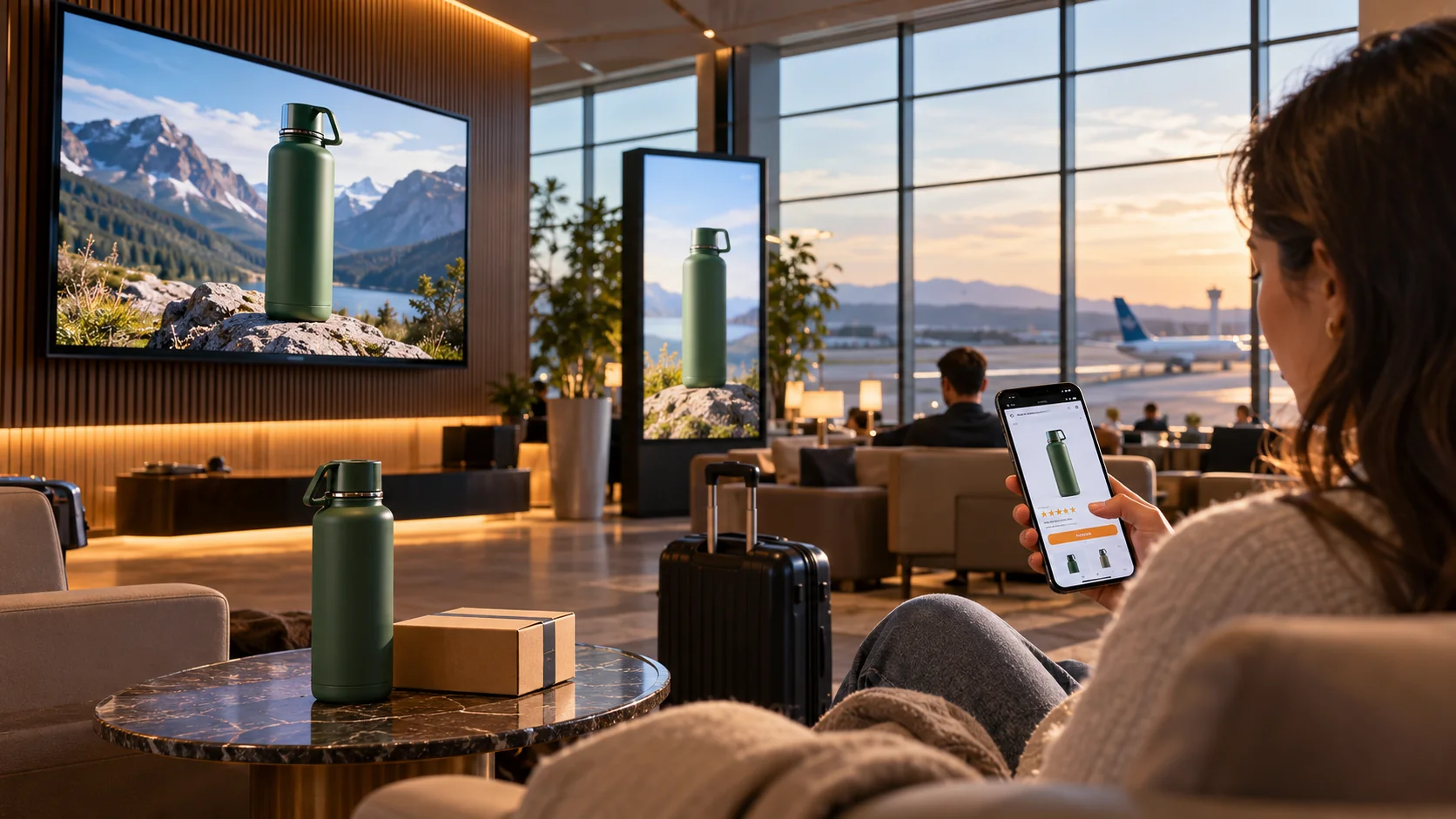
For example, a customer might first discover a fitness accessories brand through Streaming TV advertising.
Later, the customer may encounter a relevant display advertisement while browsing online.
When they search for related products on Amazon, Sponsored Ads can help them explore available options.
Full-Funnel Campaigns is designed to connect these advertising opportunities rather than manage them as unrelated activities.
For sellers, the benefit is the potential to reach customers who have not yet discovered their products while continuing to support purchasing activity.
However, Full-Funnel Campaigns does not guarantee increased sales, higher conversion rates, or improved profitability.
(Related reading: Amazon Ads Agent Explained: How AI Is Transforming Amazon PPC in 2026)
What is full-funnel advertising on Amazon?
Full-funnel advertising is a marketing approach that reaches customers at different stages of their purchasing journey.
Instead of focusing only on shoppers who are ready to buy, it also helps brands connect with people who are discovering products or comparing alternatives.
The customer journey is commonly divided into three stages.
1. Awareness: Helping customers discover your brand
At the awareness stage, customers may not know your brand or be actively searching for your products.
Advertising focuses on introducing the brand and communicating its value.
Streaming TV and video advertising can help brands reach audiences through engaging visual experiences.
For example, a company selling outdoor backpacks might use video advertising to demonstrate its products during hiking or travel activities.
The objective is to introduce the product to relevant potential customers.
2. Consideration: Helping shoppers evaluate their options
At this stage, customers are exploring products and comparing alternatives.
They may visit product pages, research features, or consider different brands.
Display and video advertising can support consideration by reminding customers about relevant products and communicating useful benefits.
For example, a shopper researching laptop accessories might encounter advertisements highlighting a laptop stand's adjustable design and compatibility.
The goal is to help customers understand whether the product meets their needs.
3. Conversion: Encouraging purchasing decisions
At the conversion stage, shoppers have stronger purchasing intent.
Sponsored Products and Sponsored Brands can help customers discover relevant products while searching or browsing on Amazon.
For example, someone searching for an adjustable laptop stand might encounter a sponsored product that matches their requirements.
The objective is to connect relevant products with shoppers who are considering a purchase.
These stages are not always linear. Customers may discover, compare, and purchase products in different sequences.
Amazon Full-Funnel Campaigns is designed to coordinate advertising across these stages using shared signals and automated optimization.
How do Amazon Full-Funnel Campaigns work?
Amazon Full-Funnel Campaigns uses artificial intelligence to coordinate advertising activity across supported formats.
Instead of requiring advertisers to manually configure every channel independently, Amazon's system handles several campaign-management tasks.
The announced process involves five main steps.
1. Advertisers provide campaign objectives
The advertiser selects the products to promote and establishes a campaign budget.
Amazon also supports an optional ROAS threshold.
These inputs help define the campaign's advertising objectives.
2. AI selects relevant advertising formats
Amazon's AI evaluates opportunities across Sponsored Ads, display, video, and Streaming TV.
It can select a combination of formats based on available campaign signals and the advertiser's objectives.
This does not mean every campaign will necessarily deliver advertising through every format.
3. Amazon identifies relevant audiences
The system uses Amazon's first-party shopping, browsing, and streaming signals to help identify relevant customer opportunities.
For example, the platform may identify audiences who could be interested in a particular product category.
Audience selection depends on available signals, campaign settings, and eligible advertising inventory.
4. AI allocates advertising budgets
Rather than requiring separate fixed budgets for every advertising format, Full-Funnel Campaigns coordinates spending through one campaign budget.
Amazon's AI can adjust budget allocation across funnel stages in response to available performance information.
This is designed to improve coordination between advertising activities.
However, automated allocation should still be evaluated against financial goals.
5. Campaigns are continuously optimized
Once the campaign is running, Amazon's system uses shared signals and performance information to make supported adjustments.
For example, engagement generated through upper-funnel advertising may provide useful signals for lower-funnel optimization.
Amazon also provides reporting that helps advertisers evaluate campaign performance across formats.
The goal is to improve overall advertising effectiveness rather than optimize each channel independently.
What advertising formats are included in Full-Funnel Campaigns?
Amazon Full-Funnel Campaigns combines several advertising formats within one coordinated campaign.
Sponsored Products
Sponsored Products advertisements help customers discover individual products through relevant shopping placements.
They are commonly used to reach customers researching or comparing products on Amazon.
Sponsored Brands
Sponsored Brands advertisements help eligible brands promote products and communicate their brand identity.
Depending on the format, these advertisements can showcase product collections, videos, and other approved creative elements.
Display advertising
Display advertising uses visual advertisements to reach relevant audiences across supported digital placements.
It can help brands maintain visibility and reach customers during product discovery and consideration.
Video advertising
Video advertising helps brands communicate product benefits through visual storytelling.
For example, a short product demonstration may show how a kitchen appliance works or explain important features.
Streaming TV advertising
Streaming TV advertising allows brands to reach viewers through supported streaming content and television experiences.
It can introduce products to relevant audiences before they actively search for them.
Within Full-Funnel Campaigns, Amazon's AI coordinates available formats based on campaign goals and optimization signals.
Advertisers should not assume that every format will receive an equal share of the budget.
What's new about Amazon Full-Funnel Campaigns in 2026?
Amazon's September 2026 launch introduced several important capabilities.
One campaign across multiple advertising formats
Advertisers can manage connected advertising activity through one campaign rather than independently configuring every channel.
One coordinated campaign budget
Amazon's AI allocates the campaign budget across supported formats and funnel stages.
This can reduce manual coordination between separate advertising activities.
AI-powered audience selection
Amazon uses shopping, browsing, and streaming signals to identify relevant customer opportunities.
Automated campaign optimization
The system adjusts supported campaign activity based on available performance information and advertiser objectives.
Built-in creative generation
Amazon provides tools that help advertisers create display images and TV-ready video assets using existing product information.
Advertisers can review and approve generated creatives before launch.
Unified advertising reporting
Advertisers can review standard measurements such as impressions, clicks, and sales alongside new-to-brand and long-term performance metrics.
Conversational AI assistance
Amazon has introduced a natural-language experience that helps advertisers explore campaign recommendations, create assets, and understand performance.
These capabilities aim to make full-funnel advertising more accessible to sellers that previously relied mainly on Sponsored Products campaigns.
When did Amazon Full-Funnel Campaigns launch?
Amazon Full-Funnel Campaigns entered open beta in the United States on September 29, 2026.
Amazon announced that the solution is available to U.S. advertisers selling products on Amazon, including sellers, vendors, agencies, small businesses, and enterprise advertisers.
Advertisers can access the supported experience through Amazon's advertising platform, including the Ads Console and self-service advertising interface.
As of October 2026, Amazon has not confirmed a general launch date for Full-Funnel Campaigns in India or other international marketplaces.
Indian sellers advertising in the U.S. marketplace should verify eligibility through their relevant Amazon Ads account.
Availability may depend on marketplace access, account configuration, and applicable advertising requirements.
What results has Amazon reported from Full-Funnel Campaigns?
Amazon has published early results from advertisers participating in its beta.
According to the September 29, 2026 announcement, beta advertisers using Full-Funnel Campaigns observed:
- 67% higher Long-Term ROAS compared with the blended average performance of independently configured advertising formats.
- 29% lower cost per new-to-brand purchase compared with that benchmark.
Amazon's supporting internal data covers June through August 2026.
These findings suggest that coordinating advertising activity across funnel stages may improve efficiency and customer acquisition.
However, the results are based on early beta advertiser data.
They do not guarantee that every seller will achieve similar performance.
Differences in product categories, budgets, targeting, creative quality, customer demand, and existing advertising strategies can influence outcomes.
The reported comparison should also not be treated as proof that the campaign format alone caused the entire improvement.
Sellers should evaluate actual performance after launching their own campaigns.
Which metrics should sellers track in Full-Funnel Campaigns?
Amazon sellers should monitor both immediate advertising results and broader customer acquisition outcomes.
1. ROAS: Return on Ad Spend
ROAS measures advertising-attributed revenue relative to advertising expenditure.
ROAS = Advertising-Attributed Revenue ÷ Advertising Spend
For example, $2,000 in attributed sales from $500 in advertising spend produces a ROAS of 4.
However, ROAS measures revenue efficiency rather than profit.
2. ACoS: Advertising Cost of Sales
ACoS compares advertising spend with attributed sales.
ACoS = (Advertising Spend ÷ Advertising-Attributed Sales) × 100
A campaign spending $250 to generate $1,000 in attributed sales has an ACoS of 25%.
3. New-to-Brand Customers
New-to-brand metrics help eligible advertisers understand purchases associated with customers who have not bought from the brand during the relevant reporting period.
These measurements can support customer acquisition analysis.
4. Cost per New-to-Brand Purchase
This measures advertising expenditure relative to attributed new-to-brand purchases under the applicable reporting definition.
A lower cost may indicate more efficient acquisition, but sellers must also evaluate product margins.
5. Long-Term Sales
Amazon's Long-Term Sales metric includes immediate conversions and the estimated future value of relevant new-to-brand customer actions over 12 months.
Because it includes modeled future value, it should not be confused with realized sales.
6. Long-Term ROAS
Long-Term ROAS evaluates long-term sales value relative to advertising spend.
Long-Term ROAS = Long-Term Sales Value ÷ Advertising Spend
This metric can help advertisers assess expected longer-term outcomes.
However, future value estimates remain uncertain.
7. Impressions and Clicks
Impressions measure how often advertisements are served.
Clicks indicate direct interactions with clickable advertising formats.
Streaming TV impressions and Sponsored Ads clicks represent different interactions and should not be interpreted identically.
8. Total Sales and Contribution After Advertising
Monitor total business sales alongside advertising-attributed revenue.
Calculate the contribution remaining after relevant product costs, Amazon fees, fulfillment expenses, and advertising spend.
The objective is sustainable profitability rather than simply maximizing reach.
Amazon Full-Funnel Campaigns vs traditional Sponsored Ads
Traditional Sponsored Ads campaigns primarily help brands reach shoppers during product discovery, research, and purchasing activity.
Sellers often manage targeting, bidding, and budgets at the campaign level.
Full-Funnel Campaigns introduces coordination across Sponsored Ads, display, video, and Streaming TV.
Instead of managing every format independently, advertisers can provide strategic inputs and allow Amazon's AI to coordinate supported activities.
Traditional Sponsored Ads can remain valuable for high-intent shopping queries.
Full-Funnel Campaigns adds opportunities to reach customers earlier in the buying journey.
Neither approach is automatically better for every business.
The appropriate strategy depends on advertising objectives, customer acquisition goals, available budgets, and profitability.
Amazon Full-Funnel Campaigns vs DVA+: What's the difference?
Amazon announced both Full-Funnel Campaigns and DVA+ as part of its September 2026 advertising updates.
Although both use AI-powered advertising optimization, they serve different campaign-management purposes.
Full-Funnel Campaigns connects Sponsored Ads, display, video, and Streaming TV through one coordinated campaign focused on sales growth and customer acquisition.
DVA+, or Display, Video, and Audio, combines programmatic advertising formats through a simplified campaign experience.
DVA+ is designed to support objectives such as awareness, traffic, and sales across display, online video, Streaming TV, and audio placements.
Amazon announced a phased DVA+ rollout beginning in late October 2026.
The main difference is the campaign structure and the advertising formats being coordinated.
Full-Funnel Campaigns explicitly connects Sponsored Ads with broader advertising activity.
DVA+ focuses on managing Display, Video, and Audio advertising through a unified programmatic experience.
Advertisers should select the approach that best supports their business objectives.
How do Full-Funnel Campaigns support Amazon SEO and GEO?
Amazon SEO focuses on improving product discoverability and relevance within Amazon's shopping environment.
Generative Engine Optimization, or GEO, focuses on making information useful and understandable to AI-powered answer and recommendation systems.
Full-Funnel Campaigns primarily supports paid advertising rather than organic product ranking.
However, advertising performance can reveal information about customer interests and purchasing behavior.
For example, a product may attract attention through video advertising but generate limited purchases after shoppers visit its detail page.
This could indicate that the product listing needs clearer images, specifications, or benefits.
Sellers can use relevant customer insights to improve titles, bullet points, descriptions, and A+ Content.
Accurate product information also helps create consistency across different advertising formats.
However, participating in Full-Funnel Campaigns does not guarantee improved organic rankings or inclusion in AI shopping recommendations.
The strongest approach combines customer-focused listings, relevant advertising, and performance measurement.
(Related reading: The Future of Amazon SEO: AI Recommendations, Conversational Search, and Buyer Intent)
Common mistakes Amazon sellers should avoid
One common mistake is assuming that Full-Funnel Campaigns automatically generates profitable sales.
AI can coordinate advertising formats and budgets, but it cannot guarantee demand, conversions, or profit.
Another mistake is increasing advertising investment without reviewing product-level margins.
Other common problems include selecting products with poor conversion performance, using inaccurate creatives, ignoring customer acquisition costs, and failing to monitor total advertising expenditure.
Some sellers may also treat projected Long-Term Sales as realized revenue.
Another mistake is assuming every campaign will automatically deliver impressions across every available format.
Amazon's AI selects formats based on available opportunities and campaign objectives.
Finally, sellers should not assume that Full-Funnel Campaigns directly improves Amazon organic rankings.
The better approach is to evaluate the solution as part of a wider advertising strategy.
Frequently Asked Questions About Amazon Full-Funnel Campaigns
What are Amazon Full-Funnel Campaigns?
Amazon Full-Funnel Campaigns is an AI-powered advertising solution that coordinates Sponsored Ads, display, video, and Streaming TV within one campaign. It is designed to help brands reach new customers and grow sales across multiple stages of the purchasing journey.
When did Amazon Full-Funnel Campaigns launch?
Amazon launched Full-Funnel Campaigns in U.S. open beta on September 29, 2026.
Who can use Amazon Full-Funnel Campaigns?
Amazon announced availability for U.S. advertisers selling on Amazon, including eligible sellers, vendors, agencies, small businesses, and enterprise advertisers.
Are Amazon Full-Funnel Campaigns available in India?
As of October 2026, Amazon has confirmed the initial open beta for the United States. A general India marketplace launch date has not been announced. Sellers should verify eligibility in their relevant advertising accounts.
Which advertising formats are included?
The solution connects Sponsored Ads, display, video, and Streaming TV. Amazon's AI selects and coordinates supported formats according to campaign objectives and available opportunities.
Does Amazon automatically allocate the budget?
Yes. Amazon announced AI-powered budget allocation across supported advertising formats and funnel stages using one coordinated campaign budget.
Can sellers set a ROAS target?
Amazon supports an optional ROAS threshold as part of the announced campaign inputs. This helps guide optimization but does not guarantee that the campaign will achieve the selected target.
Does every campaign include Streaming TV ads?
Not necessarily. Amazon's AI selects advertising formats based on campaign inputs and available optimization opportunities. Advertisers should review actual delivery reports.
Do sellers need professional video production?
Not always. Amazon provides built-in tools that can help create eligible display images and TV-ready video assets using product information. Advertisers should still review and approve creatives for quality and accuracy.
Does Full-Funnel Campaigns replace Sponsored Products?
No. The solution can operate alongside existing campaigns. Sponsored Products remains useful for reaching shoppers during relevant product searches and purchasing activity.
What is Long-Term ROAS?
Long-Term ROAS evaluates Amazon's reported long-term sales value relative to advertising expenditure. The underlying long-term value includes modeled future sales, so it is not equivalent to realized immediate revenue.
Can Full-Funnel Campaigns improve customer acquisition?
The solution is designed to reach new customers. Amazon reported a 29% lower cost per new-to-brand purchase during early beta testing compared with its stated benchmark, but individual performance is not guaranteed.
Are Full-Funnel Campaigns the same as Amazon Ads Agent?
No. Full-Funnel Campaigns is a campaign solution within Amazon's broader Ads Agent advertising platform. Ads Agent also supports other advertising types and conversational workflows.
Do Full-Funnel Campaigns improve organic rankings?
Amazon has not confirmed that using Full-Funnel Campaigns directly improves organic product rankings. Paid advertising performance and organic search visibility should be measured separately.
Should small Amazon sellers use Full-Funnel Campaigns?
Small sellers may benefit if they have suitable products, available budgets, and customer acquisition objectives. However, sellers should evaluate product margins, listing quality, and overall advertising readiness before launching.
Final Thoughts
Amazon Full-Funnel Campaigns represents an important step toward more connected, AI-powered advertising.
By coordinating Sponsored Ads, display, video, and Streaming TV within one campaign, Amazon is making it easier for brands to reach customers across different stages of the buying journey.
For sellers, the opportunity is to expand beyond immediate search demand and explore ways to introduce products to new audiences.
However, successful advertising still depends on relevant products, accurate listings, appropriate budgets, competitive offers, and profitability measurement.
AI-powered optimization can simplify campaign management, but it does not eliminate the need for strategic oversight.
As Amazon continues expanding its advertising capabilities, sellers who combine full-funnel thinking with disciplined PPC management will be better prepared to evaluate new opportunities.
Need a second set of eyes? Our team at Adorbix helps Amazon sellers improve advertising performance, optimize PPC campaigns, and develop data-driven ecommerce growth strategies. We are happy to review your advertising approach and discuss opportunities to strengthen customer acquisition and profitability. Reach out any time.
Key Takeaways
- Amazon Full-Funnel Campaigns launched in U.S. open beta on September 29, 2026.
- The solution connects Sponsored Ads, display, video, and Streaming TV within one AI-powered campaign.
- Amazon's AI coordinates audience selection, format selection, budget allocation, and supported optimization activities.
- Advertisers provide products, a campaign budget, and an optional ROAS threshold.
- Built-in creative tools can help generate display images and TV-ready advertising assets.
- Amazon reported 67% higher Long-Term ROAS and 29% lower cost per new-to-brand purchase in early beta comparisons, but these results are not guaranteed.
- Long-Term Sales includes modeled future customer value and should not be confused with realized revenue.
- Full-Funnel Campaigns is different from DVA+ and traditional Sponsored Ads management.
- Sellers should monitor customer acquisition, advertising costs, sales, and actual profitability.
- Strong product listings, relevant targeting, and responsible budget management remain essential.
- Questions? Contact Adorbix for an Amazon PPC and full-funnel advertising audit.