


Amazon A/B Testing: Easily Improve Conversions with Experiments
Introduction
Everyone knows selling on amazon is not easy nowadays. Even if you create a perfectly organized listing on amazon does not mean you are going to sell your products easily. Nowadays if a customer finds your product's image attractive that does not mean that he is going to buy your product, there is no guarantee that the product is going to be purchased. Likewise utilizing relevant keywords does not automatically imply that the title will focus on the most important aspects of the product. So it's really difficult to figure out what changes will actually make people buy.
Now with the help of Amazon A/B testing the seller does not need to make wild guesses anymore. With the help of Amazon A/B testing they can easily compare various variants of the product listing and see which option works best for them. If you are going to launch a private label brand or you are already trading on the Amazon marketplace then conducting experiments will improve your product listings.
The guide will explain how the Amazon A/B testing works, how you can conduct tests on different elements of your product listing, how to analyze the results and how to ensure that conversion optimization is going to be completed in a continuous manner.
What Is Amazon A/B Testing?
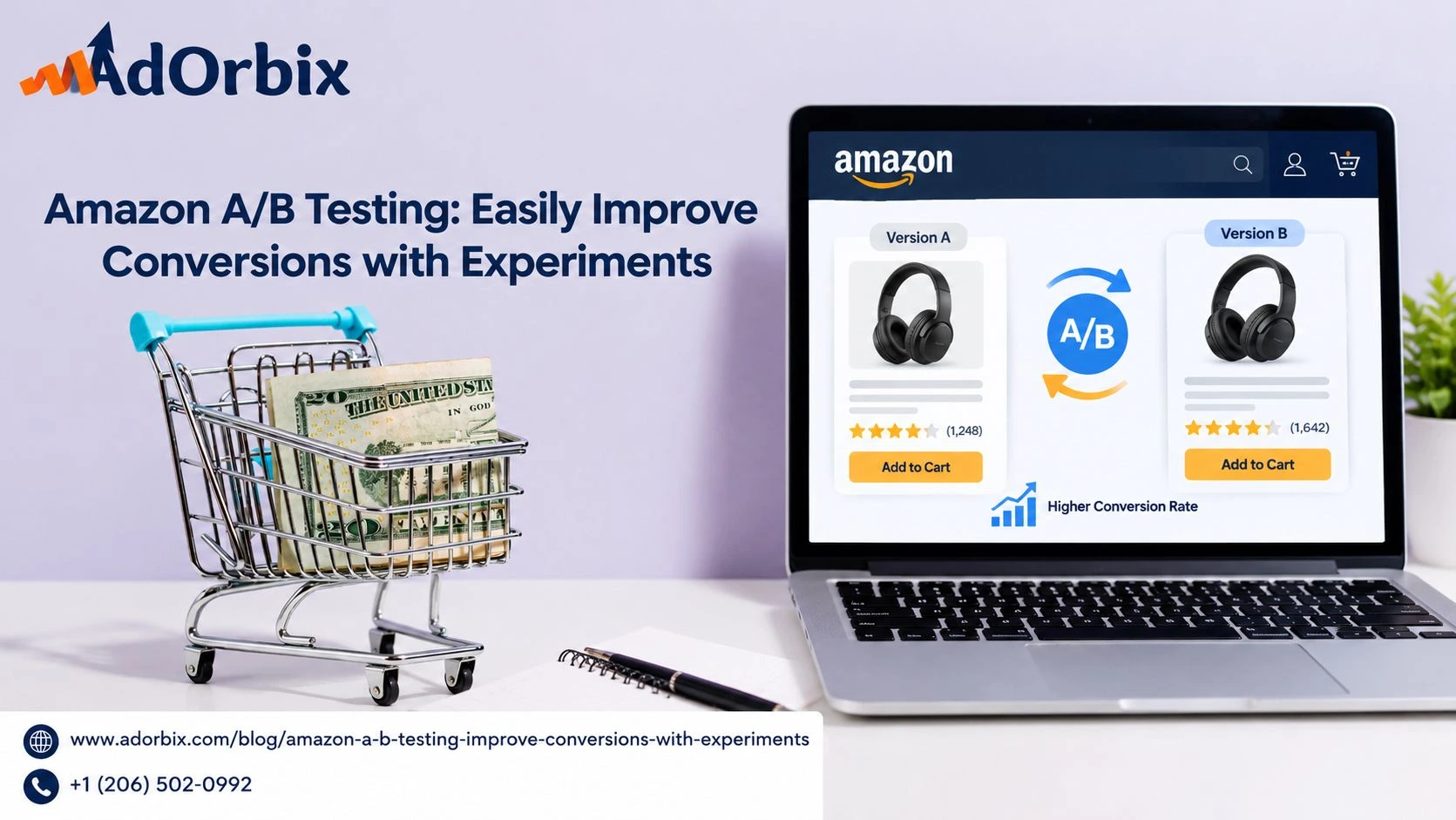
Amazon A/B testing which is also known as Amazon split testing. You should know that it is a method of comparing two versions of Amazon product listing content to establish which version performs better. Version A symbolizes the existing version whereas Version B contains the alternative version that needs to be tested. The customers who are eligible to buy products are randomly assigned to two versions of the product listing.
Now just try to understand and assume that you are selling a stainless steel bottle. For instance imagine your page only mentions the size and material of your water bottle. You could create another version that adds insulation effect and suitability for everyday use.
Instead of presuming which message appeals to more customers, the company tests both for its effectiveness. Amazon has a tool called Amazon Manage Your Experiments whereby the brand representatives can test their product description pages.
Why Amazon A/B Testing Matters for Conversion Rates
Your product listing is the final opportunity to convince a Customer that the product which you are selling meets their needs. A small touchup on the Content management can make the buying process more helpful.
Here are some of the reasons where a bit attention is required on Amazon conversion rate:
1. Learn About Customers’ Preferences
Many times buyers react differently to a product's message than what a brand first thinks. Even though some people care about convenience others are more interested in reliability, size or overall value. By testing different ideas regularly you can find out exactly what benefits your target audience likes best
2. Enhance Product Listing Effectiveness
Optimizing your main image title and bullet points is essential for a great shopping experience. Testing different configurations helps show the best way to present your product’s value.
3. Make Data Driven Decisions
Without experimentation sellers often change listing content based on competitor activity or personal opinions. A/B testing introduces evidence into the decision making process.
4. Support Long Term Business Growth
You can make better communication which will help you to improve conversion performance and make existing traffic more productive. However the results vary by product, audience, competition and test design so improvements should never be assumed in advance.
Which Amazon Listing Elements Can You A/B Test?
Amazon's Manage Your Experiments tool supports several types of product content, depending on eligibility and marketplace availability.
Titles of products
The title of the product provides prospective customers with a clear understanding of what you have to offer.
Try experimenting with different title formats that focus on other features of your product, such as its type, volume, materials, compatibility or purpose of use.
Example:
- Version A: Insulated Stainless Steel Water Bottle, volume 32 oz
- Version B: 32 oz Water Bottle – bring it every day
The same information is conveyed to the audience in both cases but the way of communication is different. Title testing serves to find out which option works better.
Be sure to stick to Amazon's guidelines for Amazon product titles and avoid unnecessary repetitions of keywords.
Main and Supporting Images
Images are crucial in online Customer purchase behaviour or interaction as customers cannot physically interact with products and.
In accordance with the experiment type being conducted, various permissible product images can be evaluated further. For example, you may compare a straightforward image featuring a product with another that reflects an important feature of the product.
Other helpful images can clarify product dimensions, instructions for use, related items and the product's advantages.
Ensure the images are accurate, simple to understand and comply with Amazon’s image guidelines.
Bullet Points
Bullet points will allow the consumer to identify product features and benefits quickly.
One version can highlight technical specifications and another might explain how those specifications would solve customer problems.
One should discuss the practical benefit of a material instead of merely putting the specs for the material but immediately follow through with a verification of such a claim.
Use experimentation to assess whether clearer benefits; improved readability; or a different information order facilitate purchasing.
Product Descriptions and A+ Content
Product descriptions are useful in giving out descriptions about a product’s features, specifications and its uses. A+ content helps brands explain their value by giving more visual content, text, comparison charts, and brand stories.
Check out which structure works better in case of a product overview.
For example, a comparative table can clearly show the differences between different models of the products but a feature-based description will be more effective when it comes to technical specifications.
The final decision is based on the type of product and the buyers' needs.
How to Run an Amazon A/B Test Step by Step
A successful experiment requires the presence of a clear inquiry, a relevant product and a strategy for understanding the results.
Step 1: Pick an Appropriate Product
Select a product that has enough traffic to produce a successful experiment.
Eligibility is determined by Amazon by taking into consideration various aspects like brand ownership and recent traffic on the product. In general, a seller needs a Professional selling account along with the correct Brand Registry enrollment and brand representation.
You can check which products can take part in the experiment by going into Seller Central and then Brands → Manage Experiments.
If a product does not fulfill eligibility requirements, check its sales performance and traffic before choosing another ASIN.
Step 2: Identify the Main Problem
Assess the current listing and look for a possible component causing confusion or inhibiting purchase confidence.
Consider this in your assessment:
- Does the title include critical product information?
- Are the images effective in depicting size and function?
- Are the images effective in depicting size and function?
- Are the bullet points answering common customer queries?
- Does the A+ Content provide information about what differentiates the product?
- Analyze customer questions, reviews and performance reports to flesh out a concept for testing.
Step 3: Create a Clear Hypothesis
A hypothesis explains what changes are planned and the reasons for those changes, making one believe that improvement will take place in performance.
For example:
"We believe that clarification of the insulation advantages of the bottle is going to help bought understand its importance better and raise the number of purchases per visitor."
This statement indicates a clear link between a change undertaken and a result that one expects to achieve with the proposed change.
Step 4: Create Version B
Create an option to existing content that makes it different enough for a valid customer choice.
When testing titles, assess the effectiveness of different ways of presenting relevant features. When performing tests of images, experiment with different looking presentations which are true and gullible.
Amazon is said to allow certain types of multi-attribute tests for some types of content, however, in most cases, testing one factor is easier to find out what caused differences in results.
Step 5: Launch the Experiment
Manage Your Experiments involves the selection of a type of experiment, selection of the right ASIN, provision of the experiment information, and submission of the alternate content for checking.
In the experiment, Amazon allocates customers to various versions instead of switching everyone from experience to experience on different days.
Log in to Seller Central and check the experiment status and its implementation settings.
Step 6: Allow Enough Time for Reliable Results
Avoid being too hasty in reaching a conclusion depending only on a small sample of sales or a short positive experience.
Amazon mentions that in case a predetermined length is used, the test can last for eight to ten weeks, but the duration can be shortened if the significance method is applied. Actual duration of the experiment may vary due to specifics of the experiment.
Interpreting results is complicated by the presence of seasonal factors, advertising campaigns, traffic variations, as well as small sample size. It is advisable to monitor the experiment all the way through to avoid drawing premature conclusions.
Step 7: Analyze and Apply the Results
Analyze the metrics of the results of different variants, for instance, the number of sales per unique visitor, listing conversion rates, and amount of sales.
If Version B turns out to be the better version, implement the winning content. Be sure to remember about any lessons learned in this process.
Best Practices for Amazon Conversion Rate Optimization
To improve the quality of your experiments, follow these principles.
- Test meaningful differences between two similar titles. Having two titles that aren’t quite the same may not allow a sufficient difference for showing a true preference. Create alternatives to test a real product decision.
- Use a customer-first strategy. While relevant keywords carry the potential to assist customers in finding relevant products, the listing should also provide clear information about the product. Don’t compromise on readability to add extra keywords.
- Avoid jumping to conclusions. Don’t make the error of jumping to the conclusion too early. Be guided by the criteria of the experiment completion and evidence available before deriving the winner.
- Document all experiments. Write down the hypothesis, versions tried out, dates, results, and conclusions. This document will serve as a very helpful guide for future listings.
- Ensure compliance with all Amazon policies. Each modification must comply with Amazon's current content regulations. Don’t make claims that are not supported with facts or add irrelevant keywords.
Common Amazon A/B Testing Mistakes to Avoid
There are a few simple mistakes that can ruin an experiment first always start with a clear question that you want to answer second let the test run long enough to gather enough real data rather than stopping it too early third look Beyond just sales conversions consider overall profits advertising costs and unit prices finally do not just copy competitors instead use what you know about your own customer to run tests that works specifically works with your audience.
Winning competition does not ensure that doing the same will work for your listing. Instead of that use the knowledge of clients and conduct controlled experiments in order to be able to form a strategy suitable for your own audience.
How AdOrbix Can Help Improve Amazon Listing Performance
To optimize Amazon listings, sellers must have more than just inserting keywords or modifying product images. Knowing what consumers want, the value of the products, and how to capitalize on changes are all crucial.
With AdOrbix sellers having a more organized way of achieving growth on Amazon thanks to listing optimization, keyword research, advertising strategy, and performance analysis. Discoverability can become a crucial step for conversions through well planned optimization. Consumers are directed to the product by relevant keywords, adequate and convincing content offers all the information they need about it, and running experiments aids in determining what has to be improved next.
Combining these efforts can enable a more consistent method of expanding one's marketplace, giving firms a greater chance with Amazon.
Conclusion
The process of A/B testing on Amazon allows sellers to get rid of those nasty assumptions and instead, replace them with real evidence. Eligible firms can discover which content better influences consumer choices by comparing product titles, photos, bullet points, descriptions and A+ Content.
- Step No.1: Clearly define your hypothesis
- Step No.2: make meaning out of your alternatives
- Step No.3: allow for the appropriate period of time to conduct a reliable experiment
- Step No.4: convert your findings into recommendations and practice.
There is no one experiment that guarantees high success. Any result resolved will therefore depend on the product demand, the quality of traffic, the competitive nature of the landscape, the pricing, the reviews of some other products and the entire customer experience.
Focus on one key listing question, execute a thoughtful experiment, and utilize what you glean. In time, this practical, disciplined approach to Amazon conversion rate optimization will help your company make sound decisions and sustain strong product listings.
Hit the final shot by exploring the Amazon services of AdOrbix that show how strategic listing optimization and marketplace support can fuel your growth.
Frequently Asked Questions
What is Amazon A/B testing?
Amazon A/B testing assesses two variations of the product listing in order to determine which is more effective. Sellers can take advantage of the findings to make smarter choices about how to optimize the listing contents.
Does Amazon offer a built-in A/B testing tool?
Indeed, Amazon has provided a Manage Your Experiments tool in Seller Central for qualifying brands to test the supported product listing content, including title, images, bullets, description, and A+ Content.
How long should an Amazon A/B test run?
The length of an experiment varies based on a number of factors, including traffic and data needs. According to Amazon, certain fixed-duration studies could be finished in eight to ten weeks, while others might be finished sooner depending on their significance.
Can A/B testing improve Amazon descriptions, and A+ Content. conversion rates?
A/B testing indicates the best performing content for customers resulting in improved conversion rates. However, results are heterogeneous and do not guarantee improvement regardless of testing.
Which Amazon listing element should I test first?
The element to be chosen should be the one that is capable of affecting the understanding of customers the most, such as the main picture, title, or bullet points. The final decision should be based on the challenges that the product faces and the options available in Seller Central.